

How to Let Go This Fall With a Simple Relaxation Practice
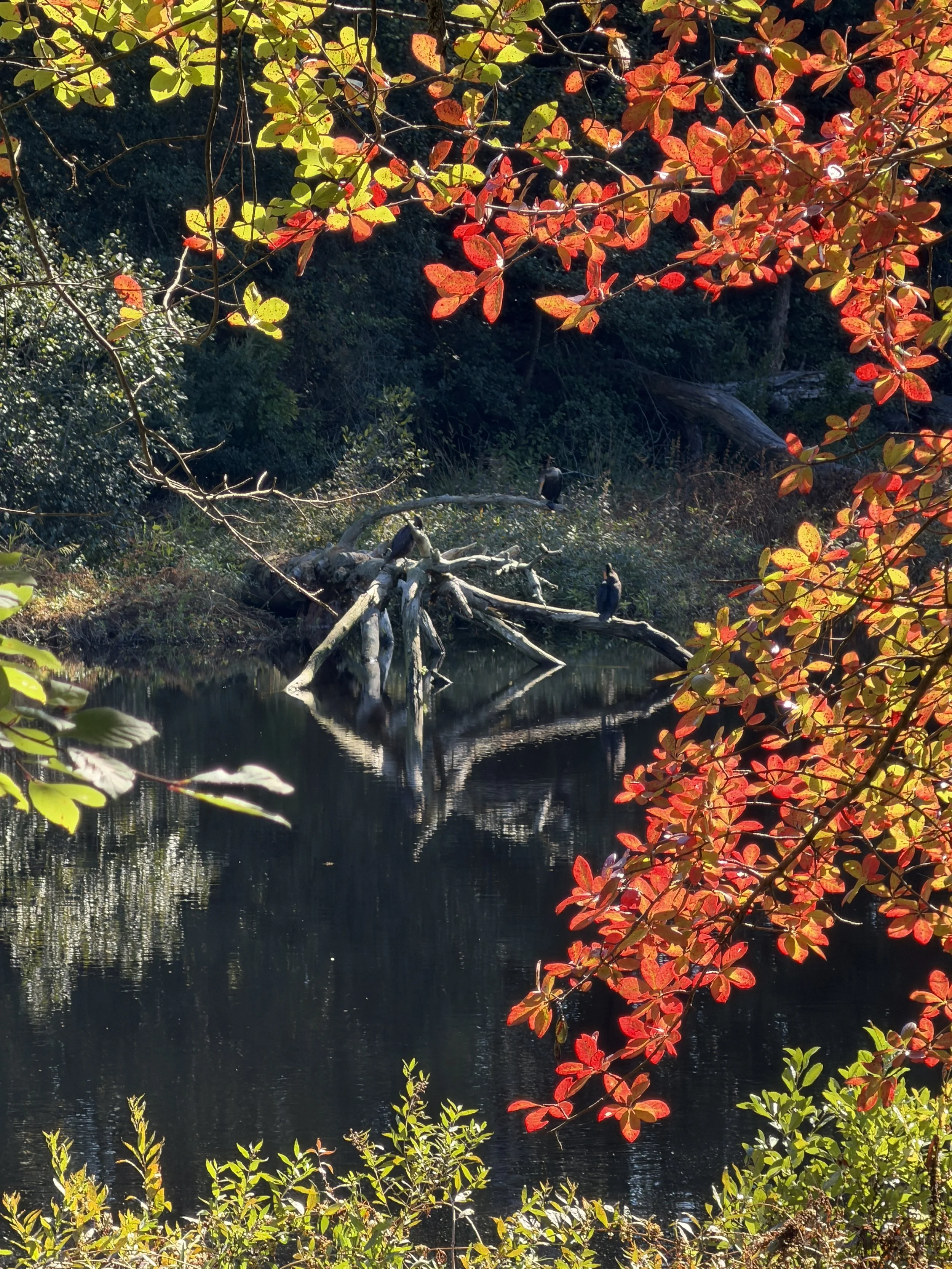
Red leaves over the pond and cormorants
I walk most days in my neighborhood here in Lewes. We're lucky to have our own nature trail, and there's green all around the community, so I never have to go far to be among the trees.
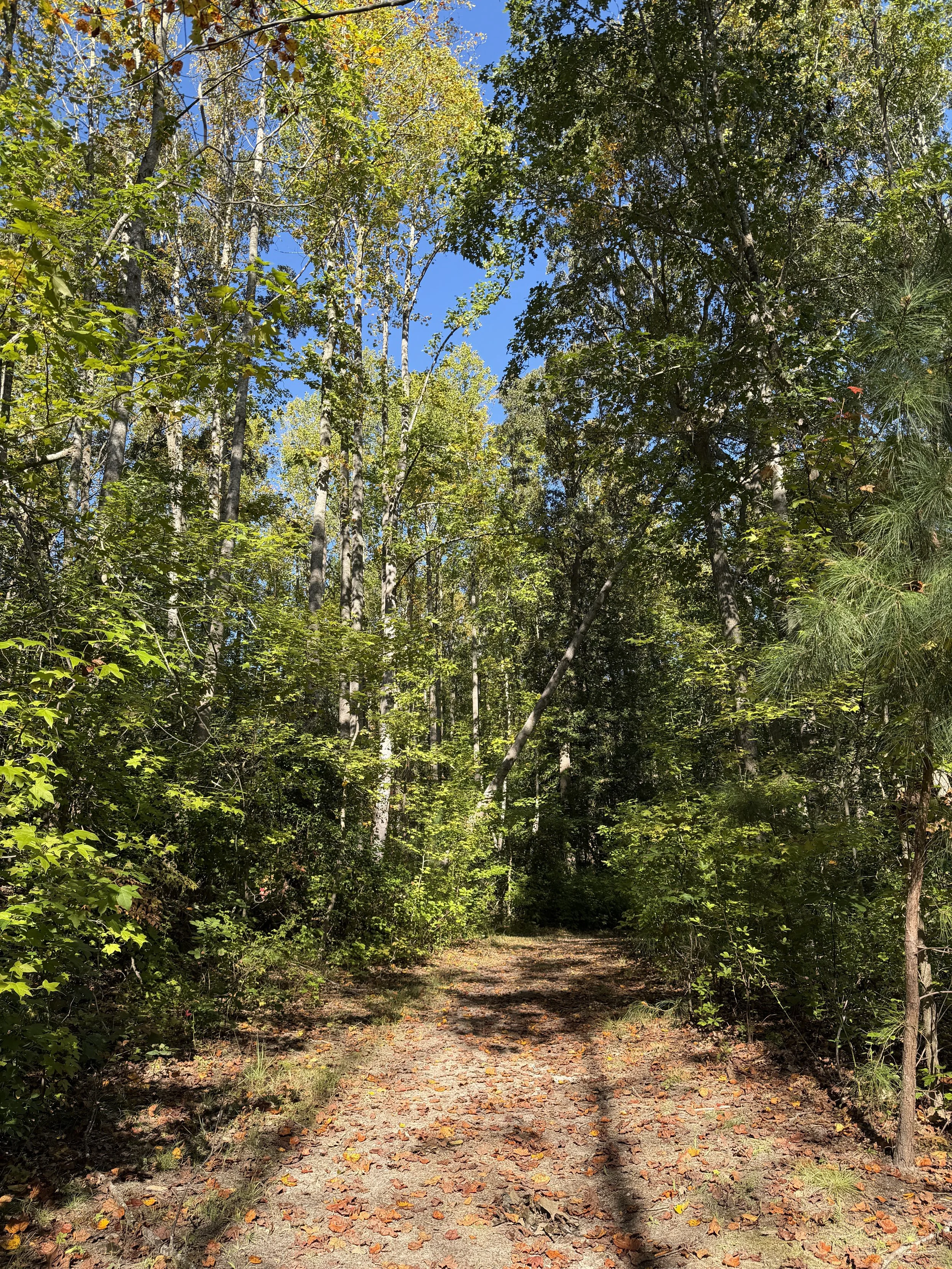
Leaf-covered trail
Most of the time, I leave my phone at home. Those walks have become part of my practice, for my body, my nervous system, and my mind. Moving my body every day is one of the best things I can do for my long-term health, and time in nature restores me in a way few other things do. I let my feet feel the ground, I slow my breath, and I let my senses lead. And it's out there, without a screen in my hand, that I notice the season turning around me.
Here's what those walks have been teaching me about letting go, along with the simple practice I use to release tension whenever I need a reset.
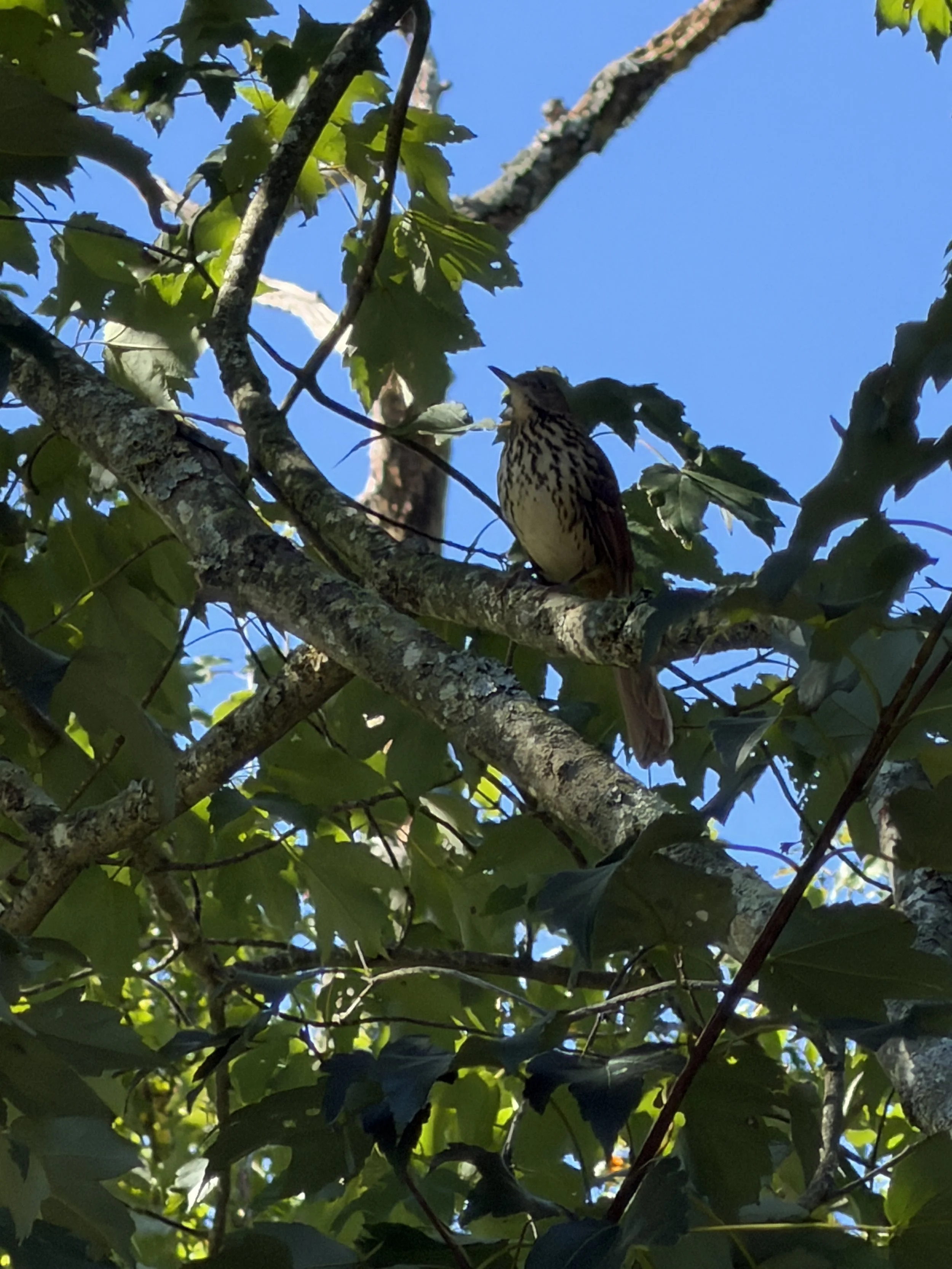
A brown thrasher in the trees
I notice the sounds first. The insect chorus shifts as the season turns, with different voices taking over the song, and later in the fall they grow quieter. Crickets even chirp more slowly as the air cools, so part of the change I hear is the temperature itself dropping. The birds sound different too, as if the whole trail is changing its tune. The ground changes as well. It feels different underfoot and begins to sound different, with nuts, twigs, and leaves falling along the path. The air smells earthier, with a little sweetness from everything settling back into the soil. The light comes in lower and more golden in the late afternoon. There's a new coolness in the air. And the colors, little by little, shift from green to gold and rust and red.
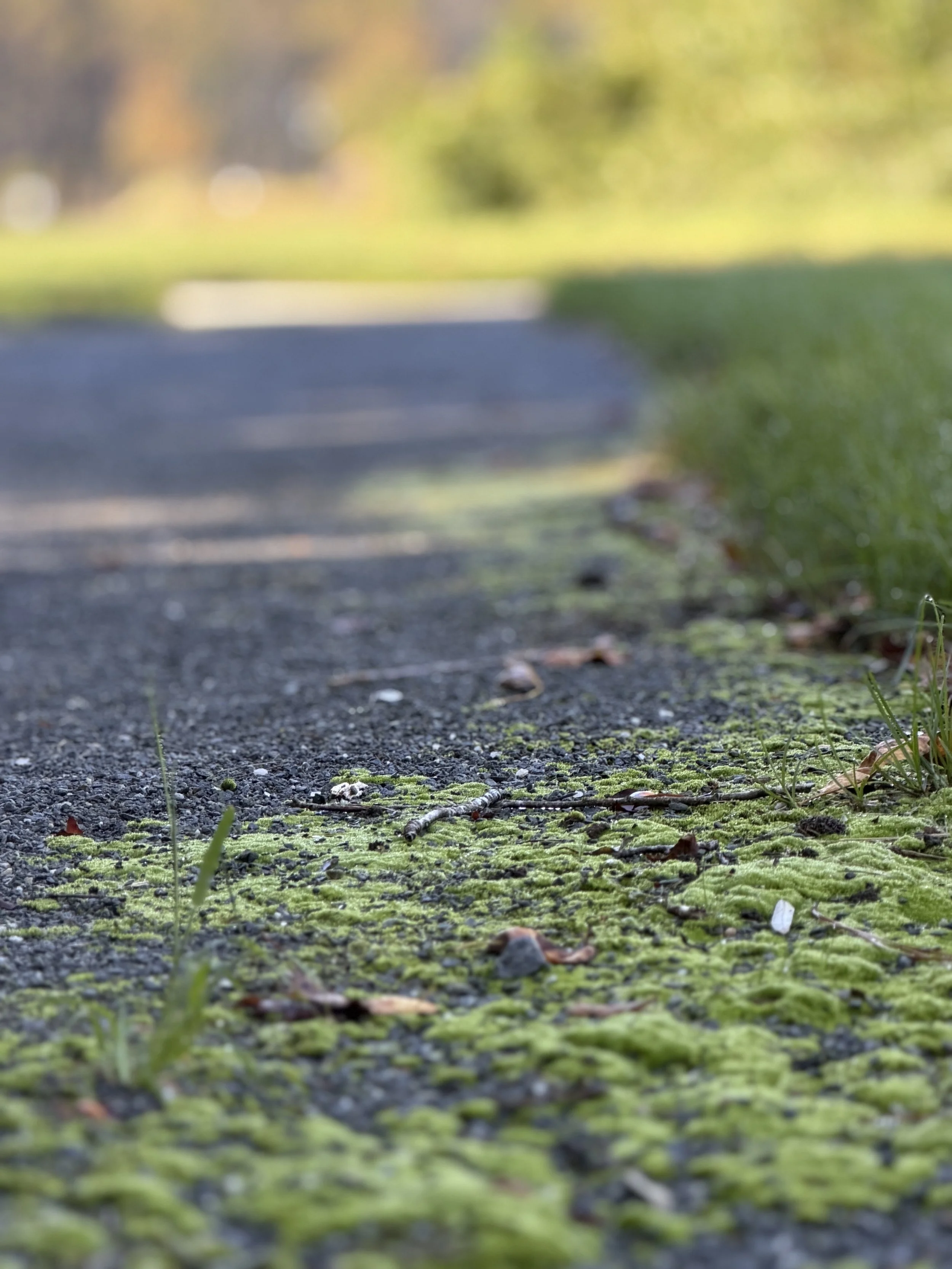
Mossy path
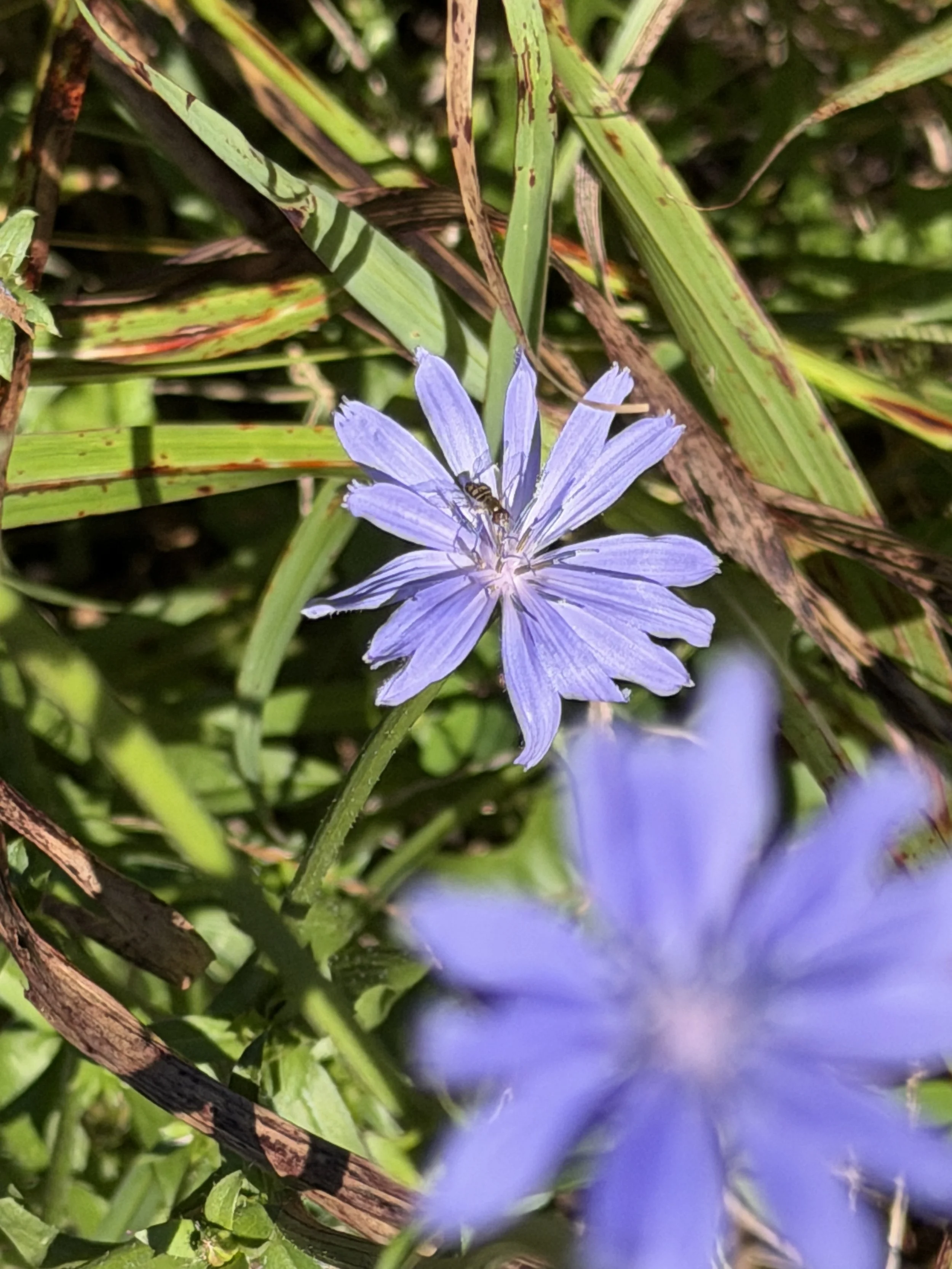
Chicory and hover fly
How a tree lets go
What I love about falling leaves is how prepared the tree is. Long before a leaf drops, the tree begins drawing nutrients from it back down toward its roots, keeping what it needs for the months ahead. Then it slowly loosens the connection at the base of the stem and forms a small seal where the leaf once held on.
The colors are part of this process too. The yellows and oranges were in the leaves all summer, hidden under the green. As the tree slows down and stops making chlorophyll, the green fades and those colors are finally revealed. I love that. Sometimes when we loosen our grip on one thing, something that was there all along gets a chance to show itself.
By the time the leaf falls, very little effort is needed. Its own weight, or a light breeze, is enough.
And what falls goes on to feed what comes next. On my walks, I find fallen branches covered in fungi and leaves softening back into the earth.
What falls becomes home to something new.
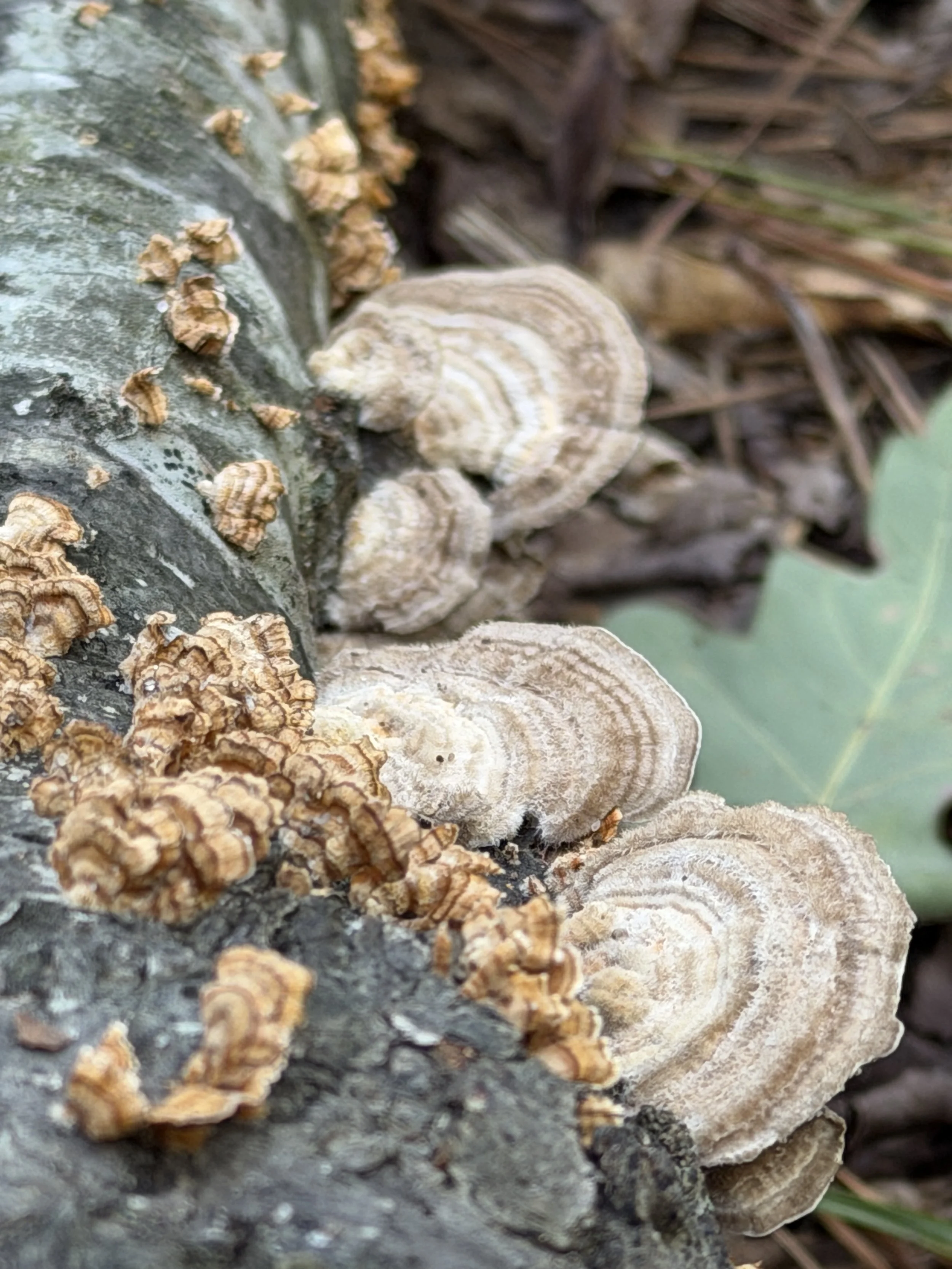
Turkey tail fungi on a fallen log
Letting go in our own lives
I've known both kinds of letting go. Some have come as big moments, a clear decision, a door closing, a sudden sense of I'm done carrying this. Others have happened so slowly I only noticed afterward, the way you realize one day that a tree is bare.
Right now, I'm practicing a quieter kind of letting go. I recently had Mohs surgery for basal cell carcinoma, a common type of skin cancer, and I've been worried about how recovery will affect my practice and my ability to make videos and share with all of you. Making the video for this post became part of that practice. I let go of how it should look, how I should look, and the idea that it had to be perfect before I could share it. What's left is simply real, and that feels like enough.
The trees remind me there's no need to rush any of it.
A gentle reminder from me. If you love being outdoors as much as I do, keep up with regular skin checks with a dermatologist. If you notice a spot that's new, growing, changing, or not healing, don't wait for your next appointment to have it looked at. And keep wearing your sunscreen, even as the days grow cooler.
Squeeze, Sigh, and Shake
Squeeze, Sigh, and Shake is my take on a shortened version of a classic relaxation technique called Progressive Muscle Relaxation, with a little somatic shaking added at the end.
Many of us carry tension without even noticing it. Shoulders creep up, the jaw tightens, the belly holds. By squeezing everything on purpose first, you can feel exactly where you're holding on. Then, when you let it all go at once, your body gets a clear taste of what release feels like. Many people find it leaves them feeling calmer, lighter, and more present.
Here's something you can do anytime you need a reset. Try it on a walk, at home, or stepping away from your desk for a few minutes.
Tighten from the ground up. Take a slow breath in through your nose and begin to squeeze everything you can.
Curl your toes and press into your feet. Firm your legs and squeeze your glutes.
Take a deep breath in, then hold it as you draw your belly in. Make fists with your hands and tighten your arms.
Lift your shoulders up toward your ears. Scrunch your face, squeezing your eyes and pressing your lips together.
Keep holding your breath and squeeze everything just a little more for a moment.
Let go all at once. Open your mouth and release your breath with a big, audible sigh, letting every muscle drop at the same time. Let it be a full, obvious release, as loud and dramatic as you like. Ahhhh.
Soften. Let your shoulders fall away from your ears. Unclench your jaw. Let your belly go soft and your face relax.
Open. Spread your fingers and toes wide. Stretch your arms out to the sides or overhead, lift your chest, and take a full, easy breath in.
Shake it out. Let your hands shake loosely, then your arms, then your legs one at a time. Bounce gently through your knees and let the shaking move through your whole body, as loose and silly as feels good.
Be still. Let the movement come to rest and simply stand or sit for a few breaths.
Repeat the squeeze and release two or three times, then end with the shake. Pause and notice what's around you. What can you hear? What can you smell? How does the air feel on your skin? And what feels different in your body now?
Only hold your breath as long as feels comfortable, and skip the hold if it doesn't feel right for you.
A few questions to sit with
What do you notice changing around you this season? The sounds, the smells, the light, the temperature, the colors?
Like the tree drawing nutrients back to its roots, what do you want to keep close as the days grow shorter?
What's one small thing you could loosen your grip on this week?
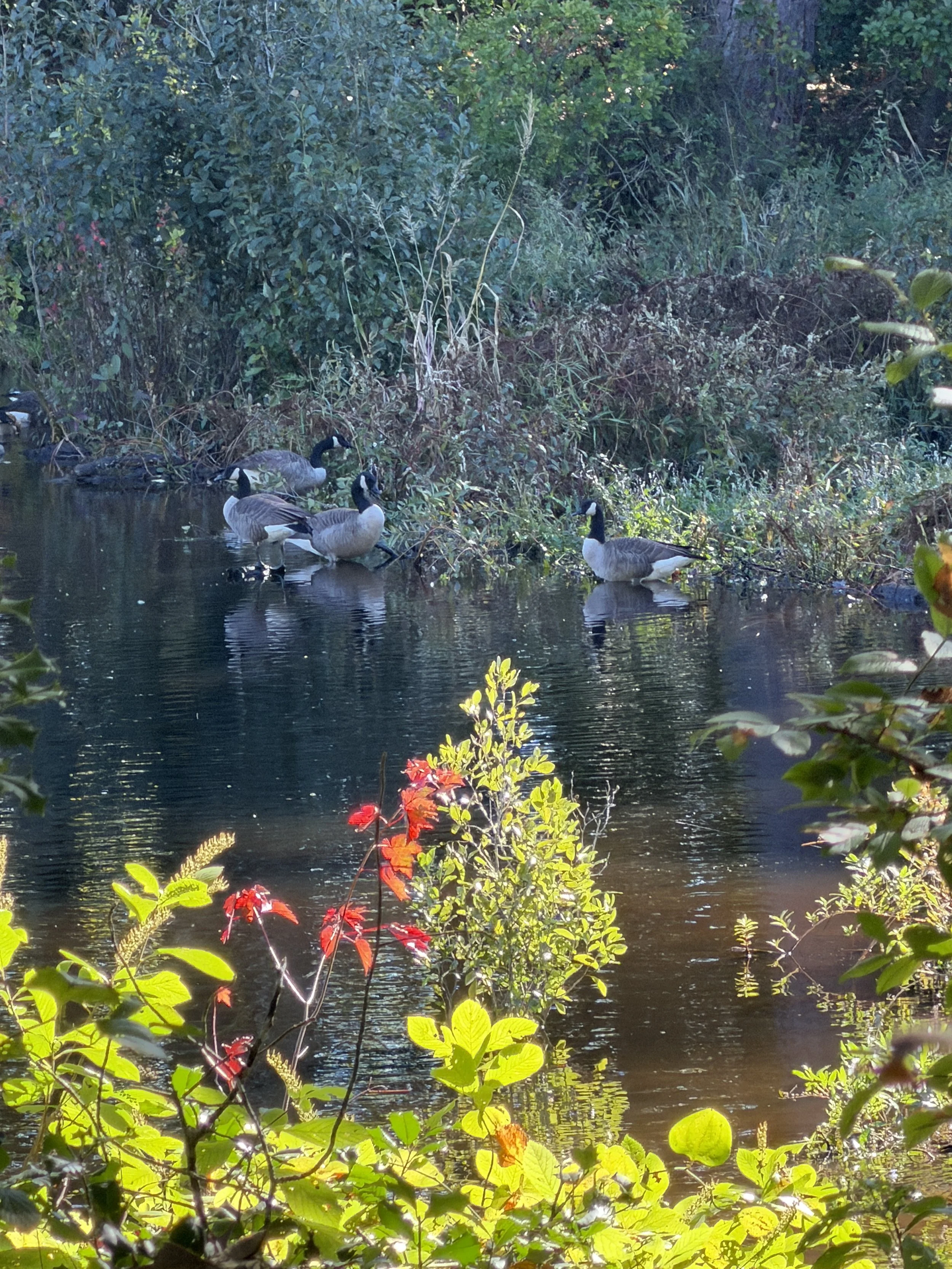
Geese on the pond
The Turning, Restore this October
Restorative yoga is the slowest, softest practice I teach. We settle into just four or five shapes in a class, each fully supported with bolsters, blankets, blocks, and sometimes the wall, and stay in each one for five to ten minutes so your body can rest without effort.
There's nothing to achieve and no flexibility required. If you can lie down, you can do restorative yoga. The props do the holding, so your muscles can finally let go. For many of my students, it's one of the few times in their week when they're allowed to do absolutely nothing. Some even drift off to sleep in a shape, and that's welcome. If you'd rather stay in Savasana the whole class, you can do that too.
I guide you into each shape, help you get comfortable, and offer gentle cues for your breath and attention while you rest in a quiet, low-lit room. Wear comfortable layers and bring cozy socks, since the body tends to cool when it's still.
This month at Dimitra Yoga, my Thursday Restore series is called The Turning. Each week follows the story of a single leaf through the season, from letting go, to falling, to rooting down, turning inward, and finally resting in the quiet of late October. Each shape begins with a few long sighs and a single word to rest with. Come to one class or join us for the whole arc.
I'd love to share this season with you.